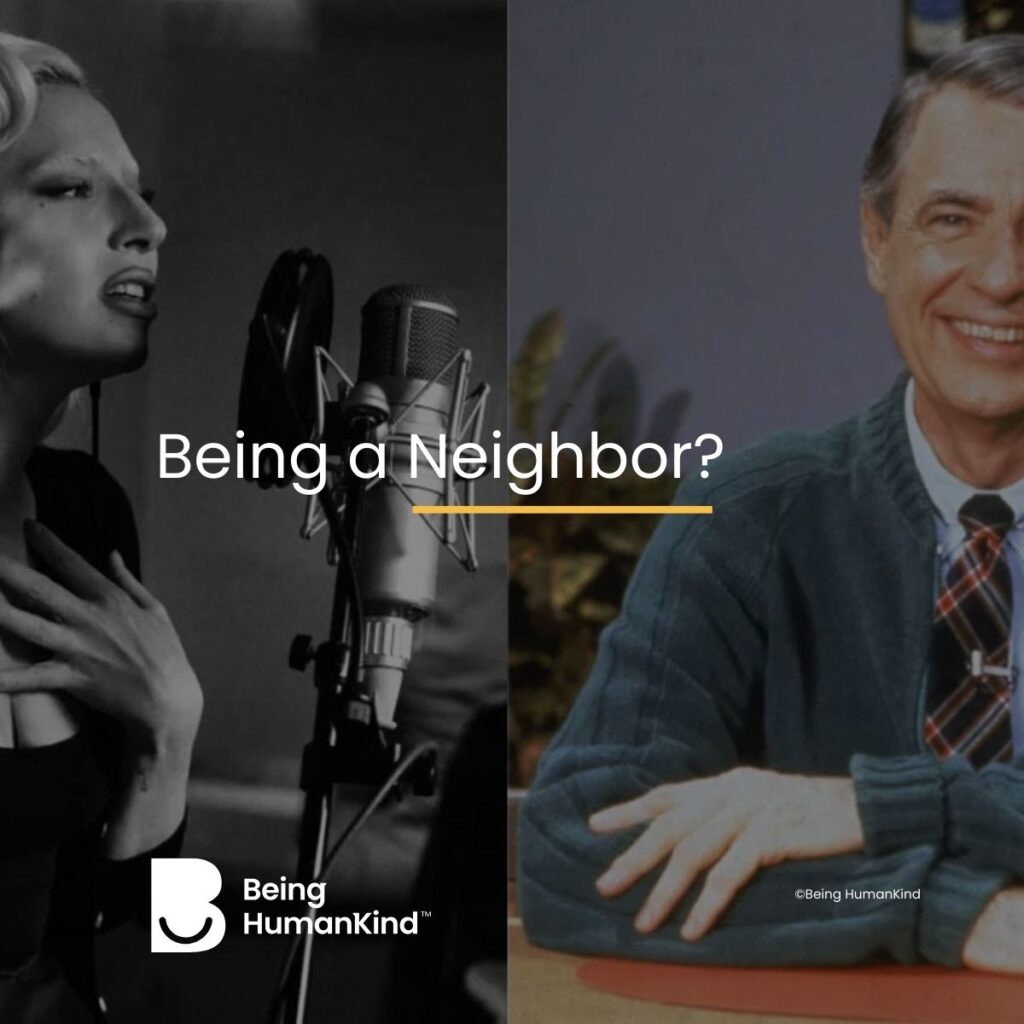
Or maybe the better question is: how are we seeing our neighbors, and what kind of neighbor are we becoming?
Fred Rogers once said the greatest thing we can do is help someone know they are loved and capable of loving.
That line stays with me because it isn’t sentimental. It’s practical. Rogers believed emotional honesty was a form of kindness. Not smoothing things over. Not pretending everything is fine. Just being present in a way people can actually receive.
That belief shaped everything he made. Especially Won’t You Be My Neighbor?
He wrote the song himself in the late 1960s as the opening theme for Mister Rogers’ Neighborhood. Music was his first language. The song wasn’t meant to impress or perform. It was meant to create safety. A promise, offered at the beginning of every episode, that you were welcome here exactly as you were.
The ritual mattered. The same walk through the door. The same sweater. The same shoes. Child development experts helped inform those choices because predictability helps people regulate. Especially when the world feels heavy. Especially when things feel uncertain.
Watching Lady Gaga revisit that song decades later, what I love most is her care.
You can feel her holding the meaning gently. She wants to honor what the song was while still making something beautiful now. The slowness matters. The restraint matters. It doesn’t rush to make a point. It invites you to stop. To listen. To breathe.
It doesn’t demand agreement. It simply asks us to notice. And yes, I know it’s a Super Bowl ad. I know it’s meant to lift up the companies behind it.
I honestly don’t care.
We need this message right now. Because being a neighbor isn’t just about who lives next door. It’s about how we see people.
Do we see our neighbors as interruptions or as humans? As threats or as stories we haven’t heard yet? As “other” or as someone doing the best they can with what they’ve been handed?
Do we actually know our neighbors? Not just the ones on our street, but the ones in our community. The ones who vote differently than us. Believe differently than us. Live differently than us.
Being a neighbor isn’t nostalgia. It’s not passive. It’s a daily choice. It’s how we show up when we’re tired, guarded, or unsure. It’s whether we lead with curiosity instead of conclusions. Presence instead of performance.
So maybe the real question isn’t whether we like the song.
Maybe it’s this: How are you seeing your neighbors right now? And what kind of neighbor are you becoming?
That question sits at the heart of Being HumanKind. It’s why I wrote it. And why I’ll keep writing. Because kindness, when it’s honest and practiced, isn’t soft.
It’s courageous.
Go Be. Go be the neighbor who notices. Go be the neighbor who listens longer than feels comfortable. Go be the neighbor who chooses curiosity over certainty. Go be the neighbor who remembers there’s a human behind every label.
That’s how we remember how to live together.
P.S. If this resonates, I’d love for you to pause with it a little longer. You can sign up, share this with someone you’d call a neighbor, and, if it feels right, consider preordering Being HumanKind. It’s an ongoing invitation to live, lead, and love with more intention in a distracted world. 👉 https://behumankind.today/being-humankind-book/
#BeingHumanKind #BeAGoodNeighbor #WhatKindOfNeighbor #HumanFirst #SeePeople #ChooseCuriosity #LeadWithKindness #CommunityOverEverything #IntentionalLiving #GoBe